

What's on at Air Force Museum of New Zealand
Latest from the museum
Support
Home For Heroes
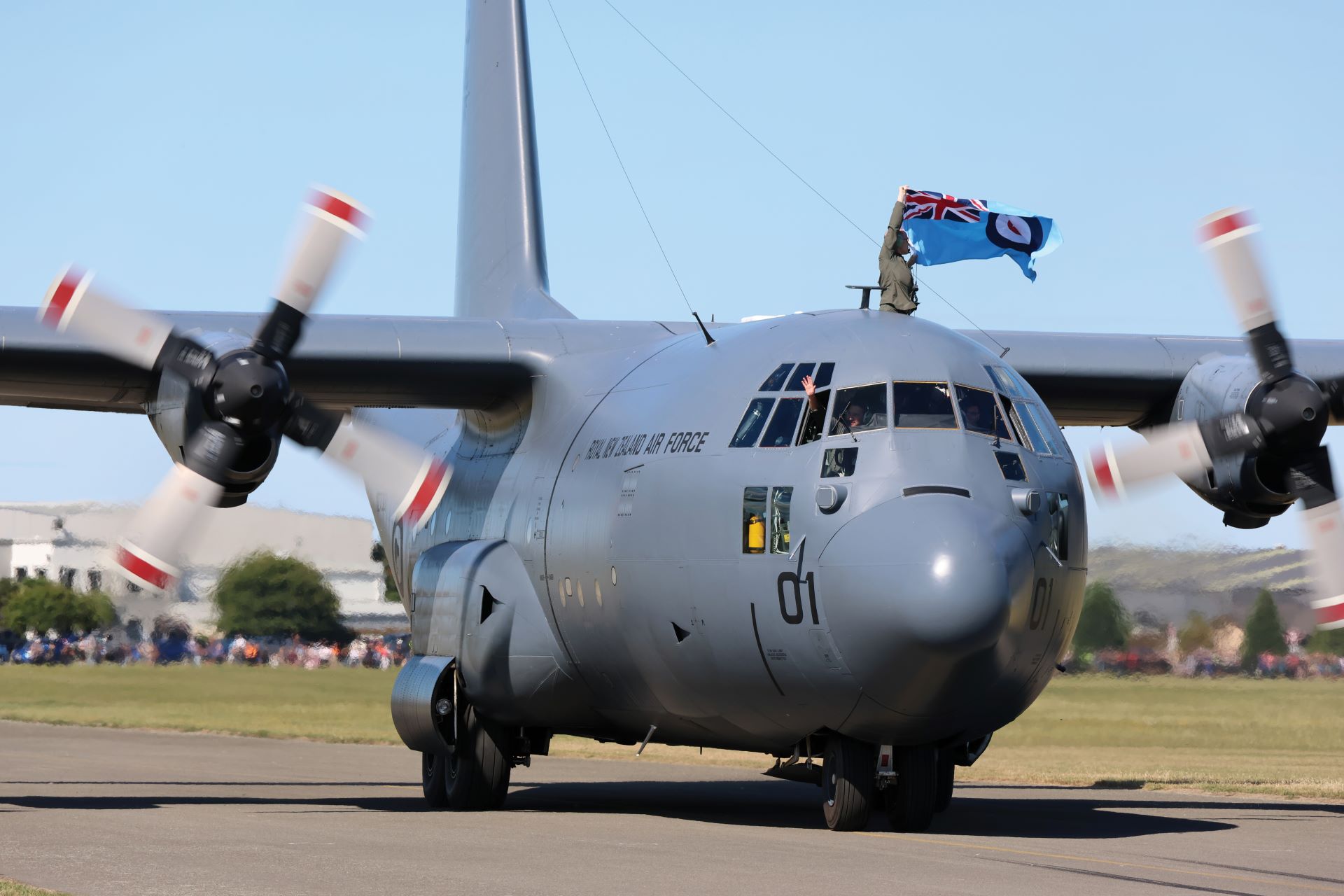
Join us in building a forever home for New Zealand’s C-130 Hercules and P-3 Orion – icons of service.
For more than half a century, these legendary aircraft carried our nation’s courage across the world – in peace, crisis, and discovery. Now, they need a home worthy of their legacy, where their stories of service, innovation and humanity will continue to inspire.
Learn More
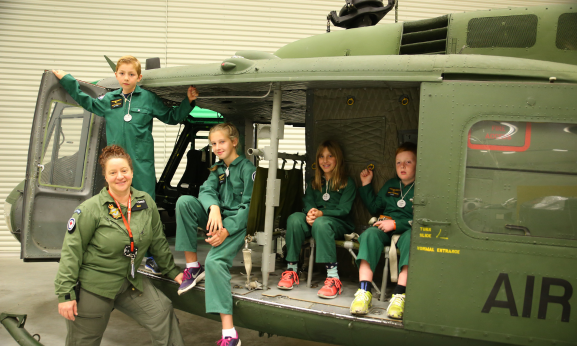
Birthday Parties
Mission: Best birthday ever
Zip up a flight suit, grab your dog tags, and dive into a fully hosted birthday “mission”. From air & sea adventures for preschoolers to rescue and cadet challenges for older children. Our Programmes team runs the activities, the children get awesome photo moments (and party bags), and you can add catering through our café.
Book a birthday party
Exhibition
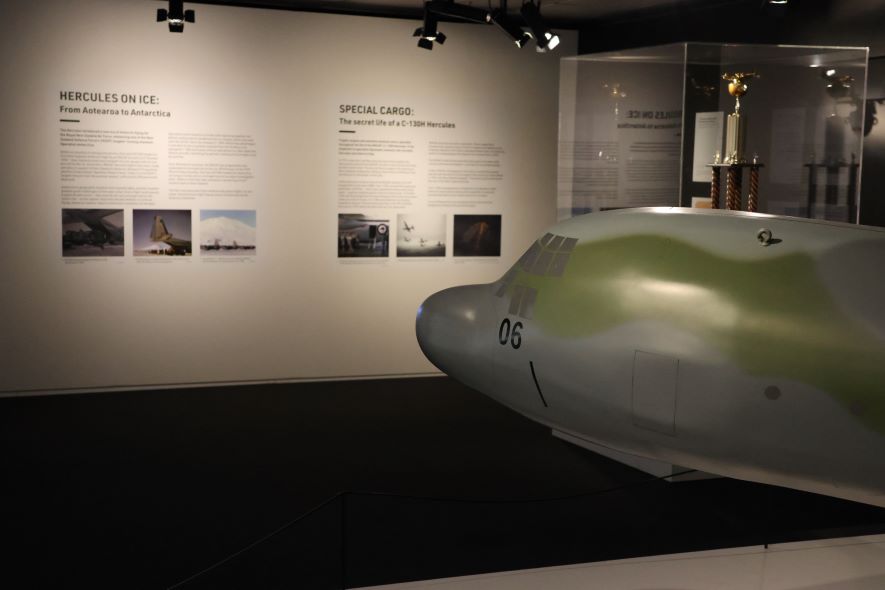
The Mighty Hercules
The Mighty Hercules exhibition is on in the Cochrane Gallery upstairs in our atrium. Come and visit and learn all about this extraordinary aircraft.
Learn More
Update
Overseas visitor charge
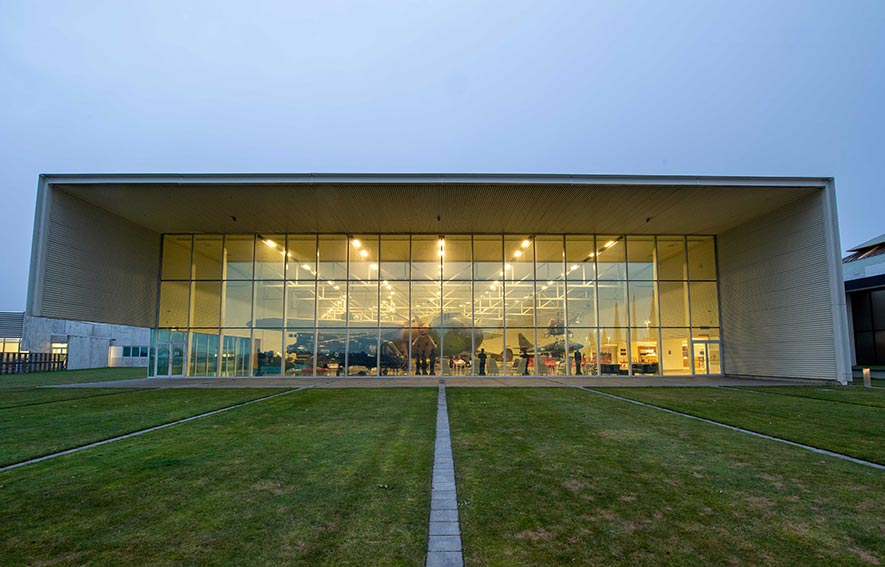
A $15 entry charge was introduced for all international visitors to the Air Force Museum of New Zealand from 31 March 2025. Tickets available online or from our Welcome Desk on arrival.
The charge is required to cover rising costs and to contribute to our new $20 million extension to house the newest members of our collection – our historic Hercules and Orion aircraft.
Learn More
Our Aircraft
Explore AircraftMore to explore


Here's how we put our Tall Tails togther - in under a minute! ... See MoreSee Less
Comment on Facebook
URGENT SPITFIRE CLARIFICATION - AGAIN!: This is our annual clarification of the differences between the Triumph Spitfire and the Supermarine Spitfire.
This confusion is so rampant we think there is a deliberate misinformation campaign raging!
The confusion is not surprising. As well as having the same name, these doppelgangers share rakish good looks, stunning performances, and both Spitfires were plucky battlers that took the world by storm.
However, there are a few subtle differences that the untrained eye might not spot, so we’ve put together a handy guide so you can tell them apart at a glance.
The first major difference is under their graceful bonnets.
The Triumph Spitfire was powered by a gutsy 1.1 litre inline four producing 63 horsepower, and had a top speed of 148 km/h. This little beauty went from 0 to an infringement notice in a brisk 16.4 seconds.
By contrast the Supermarine Spitfire was powered by a slightly more powerful 27-litre V12 Rolls-Royce Merlin engine capable of producing up to 1860 horsepower, depending on its supercharger.
This little sportster would earn you a fine by the time you took off and could exceed 700km/h when you decided to give it the jandal.
The second major difference to look for is in armament.
Triumph did not provide its Spitfire owners with gun choice as a factory option.
By contrast Supermarine gave its owners variety, with an early choice of eight machine guns and, in later models, four 20 mm cannons.
Bombs were also an option for some models. Of course, disappointed Triumph owners could always go for retrofit options.
Finally, the biggest, and probably most easy-to-spot giveaway, is in colour choices.
The Triumph Spitfire came in a huge range of colours, ranging from Leyland White to some 1970s stunners such as Carmin, Burgundy, Scarlet, Mimosa and, of course, British Racing Green.
Spitfires came in shades of green, brown and sometimes with a two-tone pattern to distinguish their undersides. Later models came with black and white racing stripes but they were mostly variations of green and brown, and it was a dull range compared to the Triumphs.
So, there you go – hopefully you will never be confused again.
And one more appeal - please, whoever you are, stop confusing the people!
#rnzaf #rnxafpastandpresent #spitfire #triumphspitfire ... See MoreSee Less
Comment on Facebook
One performed air strikes, the other was built when the workers weren't striking.
Thank you. Also: the Supermarine Spitfire in this picture is very clearly Czech. Which was quite unusual for Triumph Spitfires.
I have sat in both kinds. I definitely prefer the one with the whirly thing on the front.
... to be fair the first thing you do with both after putting them away for the night is placing a drip tray under the engine ...
The Triumph came with engines upto 1491cc in latter times. As for Supermarine colours you forgot PR pink, amongst others.
... both could be "fun" to work on, what with all those rather odd British nuts & bolts sizes ...
View more comments
RURAL WOMEN NEW ZEALAND is celebrating 100 years of good works this year, including once being the proud funders of a Supermarine Spitfire!
So Lynette Harris, Sally Brown and Emma Burke from the Darfield Glenroy Branch of RWNZ were keen to get a close up of our beautiful Supermarine Spitfire when they called in for a guided tour of our museum.
Back when the Second World War was at full pitch, rural communities around the country held fundraisers to buy Spitfires to support the war effort.
Rural Women, known then as Women’s Division of the Farmers’ Union of New Zealand, fundraised for three months to purchase a Spitfire.
It was named ‘Levin’ after the hometown of the No. 485 RAF (New Zealand) Squadron pilot Sergeant Lyndon Griffiths and had WDFUNZ painted on its cowling.
As well as celebrating 100 years of supporting rural communities, RWNZ is still a fundraising and good works machine, focusing on advocacy, support and connection for women and families in isolated rural communities.
Its latest effort was knitting 100 blankets for Plunket, and, just quietly, our Spitfire could do with a winter blanket to keep it warm!
Happy 100 RWNZ/WDFUNZ!!!!
#485squadron #rwnz #ruralwomennewzealand ... See MoreSee Less
Comment on Facebook
OU-V (ML407) was normally the aircraft of Kiwi pilot Johnnie Houlton - he shot down the first German aircraft on D-Day in OU-V. The genuine OU-V is still flying in England after being converted to a TR9 two-seater aircraft.
The "Farming Ladies Spitfire" was indeed flown by other pilots - W.D.F.U.N.Z RAF serial NO w3528/ ou.
This is superb.
What a great story and wonderful work they are still doing